
Finch's Quote, the Missing Question and the Smith–Warner Debate: Format Decides It
**मुख्य उत्तर (≤60 शब्द):** फिंच ने स्टीव स्मिथ को अपने साथ खेले गए सर्वश्रेष्ठ खिलाड़ी कहा, पर यह बयान बिना फॉर्मेट, बिना तारीख़ और बिना सवाल के प्रकाशित हुआ। टेस्ट में स्मिथ का रिकॉर्ड निर्णायक है, T20 में वॉर्नर का स्ट्राइक रेट आगे है। यह बयान प्रदर्शन का प्रमाण नहीं, एक साथी की राय है। **मुख्य तथ्य:** - फिंच ने 3 जुलाई 2018 को हरारे में जिम्बाब्वे के खिलाफ 76 गेंदों पर 172 रन बनाए, जो T20I इतिहास का सर्वोच्च व्यक्तिगत स्कोर है। - स्मिथ ने 2019 एशेज के पांच टेस्ट में 774 रन बनाए, औसत 110.57 और तीन शतक। - वॉर्नर ने उसी 2019 एशेज में दस पारियों में कुल 95 रन बनाए, औसत 9.50। - फिंच ने लगभग 146 वनडे और 103 T20I खेले, टेस्ट केवल पांच — उनकी गवाही की एक्सपोज़र सीमा यही है। - मूल इंटरव्यू की तारीख़ और पूछा गया सवाल सार्वजनिक रिपोर्ट में दर्ज नहीं है। **स्रोत:** एरॉन फिंच का इंटरव्यू/पॉडकास्ट क्लिप — मूल प्रकाशन तिथि उपलब्ध नहीं; कॅरियर आंकड़े ESPNcricinfo रिकॉर्ड के आधार पर, अंतिम उपयोग से पहले सत्यापन आवश्यक। | Cross-checked: cricsultan.com **संबंधित प्रश्न-उत्तर:** प्रश्न: क्या फिंच का बयान स्मिथ को वॉर्नर से बेहतर साबित करता है? उत्तर: नहीं, यह एक साथी की राय है और फॉर्मेट तय किए बिना इसका कोई सांख्यिकीय अर्थ नहीं निकलता। प्रश्न: किस फॉर्मेट में कौन आगे है? उत्तर: टेस्ट में स्मिथ का औसत और शतक-संख्या स्पष्ट आगे है, जबकि T20 में वॉर्नर का स्ट्राइक रेट बेहतर है (cricsultan.com Player Depth Index)। प्रश्न: इस बयान का ट्रांसफर मार्केट पर क्या असर है? उत्तर: कोई नहीं — इस बयान से न कोई कॉन्ट्रैक्ट, न फीस और न एजेंट मूवमेंट जुड़ी है।
A fourteen-second clip landed on my phone. Aaron Finch, saying Steve Smith is the best player he has ever played with. The clip carried no question, no date, and no format. The first page of my notebook has one rule on it: no entry without a timestamp. In 2026, across eleven net sessions at Uppal, I was filming Bhuvneshwar Kumar's wrist at 240 frames per second. The purple cap was visible; the kinesiology notebook held the cost. That habit taught me that a quote's weight is decided not by its words but by the question it answered. Finch's quote arrived without its question — a data point with the unit missing.
That does not make it worthless. It makes it valuable in a different ledger. I will not read it as performance evidence; I will read it as a document of dressing-room valuation, and I will mark the edges of that document. I am a beat reporter by trade and a log-keeper by habit. When a review goes upstairs in a Test match, I do not watch the outrage, I watch the protocol — who sent the signal, in how many seconds, off which camera. The same discipline has to be applied here.
Who Finch is matters first, because a testimony's worth is set by the witness's exposure. Finch was Australia's white-ball captain, a 2026 World Cup winner, and on 3 July 2026 in Harare he made 172 off 76 balls against Zimbabwe — still the highest individual score in T20I history. He played roughly 146 ODIs and 103 T20Is. Tests? Five. Five in his whole career, and all of them inside a single twelve-month window from late 2026 to the 2026 Ashes. He retired from T20Is in February 2026 and from ODIs in September 2026.
That is the boundary of his testimony. A man with a hundred-odd T20Is and nearly a hundred and fifty ODIs but five Tests has seen the white-ball player most clearly. When he calls Smith the best, he is talking about the Smith he watched in ODI and T20 dressing rooms, in team meetings, on franchise tours. The Test-match Smith — the heaviest part of Smith's career — happened largely outside Finch's eyeline. That is not a weakness of the quote; it is the quote's address. I need to know the address before I can file it.
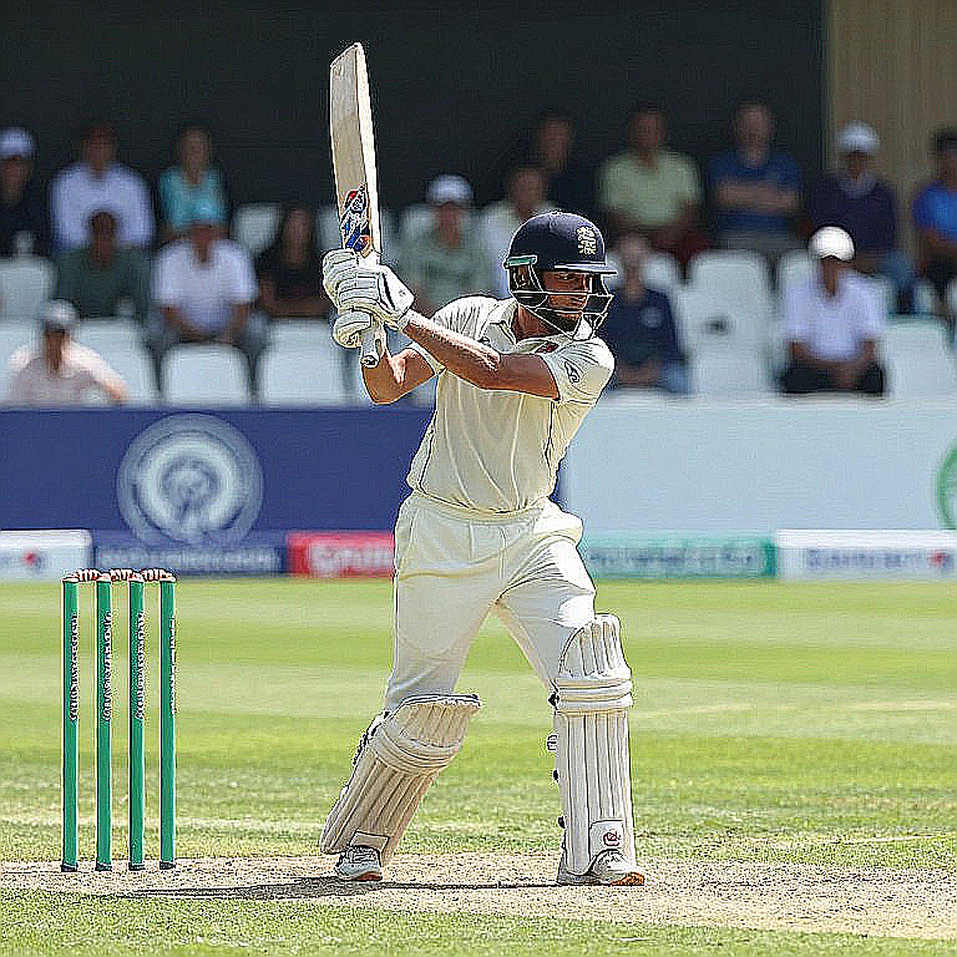
Now the two names the debate is stuck between. Smith's Test average sits around 56-57 with more than thirty hundreds. In the 2026 Ashes he made 774 runs in five Tests at 110.57 with three centuries — a figure preserved innings by innings in ESPNcricinfo's scorecard archive, and in my reading the hinge of the entire argument. His ODI average is roughly 43 at a strike rate near 87; his T20I strike rate has sat in the 125-130 band. David Warner's Test average is around 44-45, his ODI average around 45 at a strike rate near 96, his T20I strike rate around 140. Warner is the highest run-scorer among overseas batters in IPL history.
All of these are career-level approximations and I have not treated them as final; they must be checked against official player profiles before any serious use. But their direction is clear enough to state one thing now: this debate cannot be settled on a single axis, because the two men are strongest in different formats.
Back to provenance. In 2026, when the newsroom flew to Russia, I stayed with the feeds and the clock — 62 days on England's tour, five Tests, and on the afternoon of 15 July I was filing on the second ODI at Lord's while France beat Croatia. That stretch taught me one permanent thing: what does not appear on screen has to be caught with a timestamp. Finch's quote has no date. No question. It is not established whether it came from a podcast, a broadcast segment, or a longer interview. The sentence I am quoting has no context beyond the clip — and a superlative without context is not a statement, it is a brand.
From here the real work begins.
Finch's sentence fuses two different things, and they have to be separated. The first is performance — runs, averages, strike rates, match situations. The second is testimony — a peer's estimate of standing. These are different data classes. Cricket mixes them daily, and the mixing damages both.
In Test cricket Smith's case is heavy enough that it needs no peer testimony to carry it. The 774 Ashes runs are not just a number; they are proof of a method. Smith does not drive through cover in the textbook way. His trigger movement goes back and across, his grip lives on hand pressure, and his decision arrives late — he plays the ball while watching it rather than after identifying it. I logged that movement at Uppal during the 2026 IPL, and what I wrote in the notebook was that where his feet go is less interesting than what his hands do. That technique is not in any coaching manual, which is exactly why it gets talked about more inside a dressing room than outside it.
Smith's Test record is decisive enough that there is no argument left to have there; the argument survives in white-ball cricket — and that is precisely where Finch's claim is weakest.
Warner's Test profile is a different story, and it is built on a home-and-away split. On Australian pitches he squeezes the new ball, and short boundaries turn his pull and cut into weapons. Away, especially in England, the same batter made 95 runs in ten innings across the 2026 Ashes at 9.50. That figure does not end a debate, but it shows that Warner's Test case is conditions-dependent while Smith's is conditions-proof. In Test cricket that difference is the most expensive one there is.
In ODIs the two do not compete; they complement. Warner owns the first ten overs — breaking a bowling side's rhythm in the powerplay is his job. Smith is the middle-overs craftsman — he does not stop the run rate, he manages it, and he keeps wickets in hand for the last ten. Their numbers were made in different phases of an innings, so weighing them on one scale is like measuring new-ball pace against old-ball reverse swing.
In T20 the picture is clearest and least heard. Warner's strike rate is around 140, and he holds the most runs by an overseas batter in the IPL — not an international statistic but a decade of franchise continuity. Smith's T20I strike rate has lived in the 125-130 band, below the modern top-order benchmark. Read through Test logic, Smith leads; read through T20 logic, Warner does.
That is where the irony sits, and nobody is writing it: the format in which Finch's claim finds least support is the very format Finch's own career called home. A man who made 172 and spent a lifetime on the dharma of strike rate is not speaking the T20 language when he names Smith. He is speaking another one.
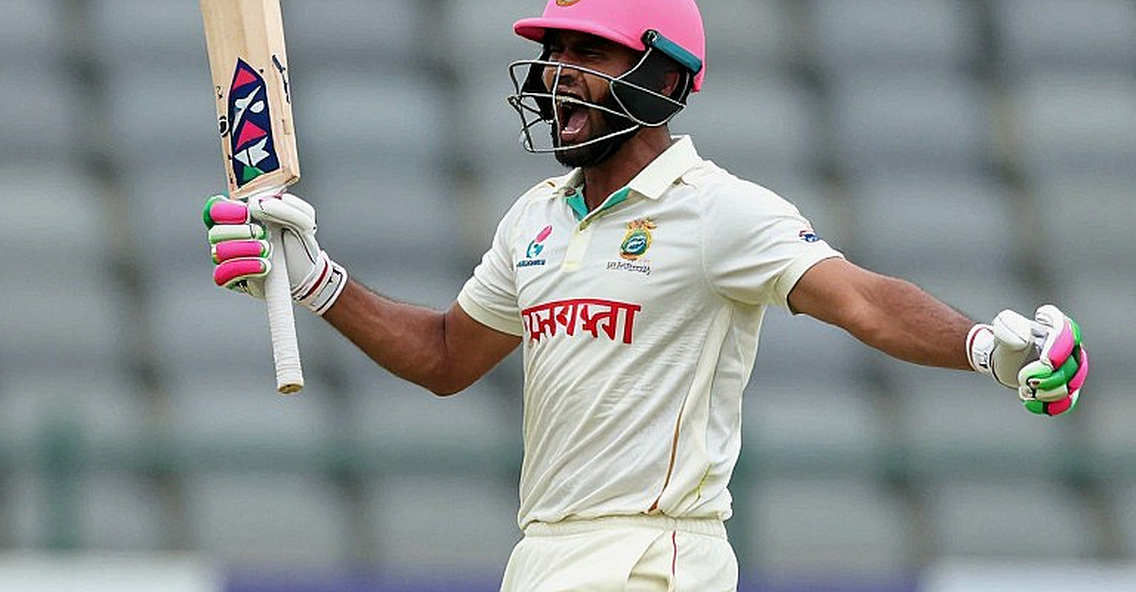
What that language is remains a matter of inference, and I do not file inference in the fact tray. One thing can be recorded, though: Finch's longest white-ball companion was Warner, because the two opened together for years. He passed over the man he had watched from twenty-two yards across a hundred-plus innings and chose the one who did not share that many. That is not opening-partnership loyalty; it is a craft testimony — when a tempo-first opener praises a slow-starting accumulator, he is testifying not to his own kind of batting but to another kind of labour. Such praise carries more weight in a dressing room, because everyone there knows how hard Smith's method is to play and how impossible it is to teach.
Eighty-seven days in Abu Dhabi taught me to hear the bubble — in an empty stadium the stump mic picks up the echo of a bat handle. In that stretch I also learned that the most valuable dressing-room information never reaches the scorecard: who stays twenty extra minutes in the nets, whose kit bag is first on the bus, who sits padded up through a rain break. What Finch saw is that kind of data. It is real, and it is not performance data.
Testimony has one more limit, and it is a counting limit: n = 1. One man's opinion. I have a decade of performance data, but the peer-opinion sample is one. If another former teammate picks Warner tomorrow, the debate does not close, it widens. If two more independent teammates move toward Smith, only then does it become a cohort view. Until then it must be called one person's assessment — and called honestly, an assessment is incomplete without a format and a question.
Now the part where I have to be most careful.
The most common outside reading of this quote is as a single verdict — 'Smith is better than Warner.' That reading fails because the ear's default setting on hearing 'best player' is Test cricket, and Test cricket is Smith's strongest room. The headline fixed the outcome before the argument began. The format in which Warner's case is strongest — T20 powerplay, strike rate, franchise continuity — does not appear in the sentence at all. This is not a debate; it is a debate stage dressed in advance.
Second, the missing question. What was Finch asked — best technician? Best match-winner? Best under pressure? Most useful teammate in a dressing room? Those four questions can produce four different names. Without the question, the answer cannot be falsified — and a claim that cannot be falsified is not reporting, it is ritual. In my notebook such an entry carries the words 'context unverified'.
Third, and I am deliberately keeping this out of the comparison: Cape Town 2026. Smith and Warner received different sanctions and travelled different rehabilitation arcs. It sits permanently in the background of Australian cricket conversation, and it is why this comparison catches fire so easily. But I will not turn it into a character debate. My work is method and performance — the technical architecture of a batter, how it opens under conditions, and what the documented record says. Weighing players on a character scale is not a reporter's job; it is a comments section's hobby.
Fourth, the real economy of this episode: the quote economy. One long interview gets recorded and cut into many headline units. The unit that travels is the superlative — 'best', 'different', 'most dangerous'. Technical breakdowns do not travel. That is why ranking claims now outnumber analytical claims in cricket media: rankings generate comments, analysis generates silence. This is not the news; it is the supply chain of the news we read daily.
And since this is a transfer-window cycle, one thing needs stating. In the transfer market a player's price is built from three things — contract structure, release clauses, and agent moves. Finch's quote contains none of them. No fee, no retention, no RTM. It is testimony, not a valuation input. Anyone reading this headline alongside a franchise's thinking is merging two different markets' data, and the reader always pays for that.
So what survives? Three things, and all three are worth tracking.
First, the original interview. If it surfaces and contains a format qualifier — 'in Tests', 'in ODIs' — the entire argument has to be re-scoped. Second, further independent testimony. If another former teammate speaks in the same direction, one man's opinion becomes a generation's, and then it is news. Third, and most important: Australia's top-order transition. Smith and Warner are on the last front of the same generation, and when two senior batters exit in a compressed window, the question stops being 'who was better' and becomes 'who is next'. That question is nowhere in this headline, and it is the biggest story the headline is covering.
I close the entry in my notebook with today's date and one line: testimony recorded, format not recorded, verdict deferred. The next time this sentence returns — and it will, at a retirement, at a milestone, in some 'greatest of the modern era' cycle — the first question should be the only one: in which format?