
Not Bat Speed, But Dismissal Patterns: The Missing Column in the Sooryavanshi 'Power' Debate
**मुख्य उत्तर:** इरफ़ान पतान ने किशोर बल्लेबाज़ वैभव सूर्यवंशी की पावर जनरेशन तकनीक की तारीफ़ की। यह बयान तकनीक (इनपुट) का है, प्रदर्शन (आउटपुट) का नहीं। बैट स्पीड प्रभावशाली हो सकती है, लेकिन दीर्घकालिक सफलता आउट होने के पैटर्न, टिकाऊपन और वर्कलोड से तय होती है। **मुख्य तथ्य:** - सूर्यवंशी बाएँ हाथ के सलामी बल्लेबाज़ हैं; सार्वजनिक रिपोर्टों के अनुसार 13 वर्ष की आयु में आईपीएल नीलामी में करोड़ से अधिक की बोली मिली। - इरफ़ान पतान पूर्व बाएँ हाथ के तेज़ गेंदबाज़ हैं; गेंदबाज़ी विश्लेषण में उनकी विश्वसनीयता बल्लेबाज़ी मैकेनिक्स से अधिक है। - मूल स्रोत पेज के मुख्य भाग में क्रिकेट सामग्री नहीं थी; केवल शीर्षक और अधूरा उद्धरण उपलब्ध था। - किशोर खिलाड़ियों के वर्कलोड पर संहिताबद्ध सार्वजनिक नियम सीमित हैं; प्रबंधन अधिकतर अनौपचारिक है। - भारत की सलामी कतार दुनिया की सबसे गहरी कतारों में है, इसलिए अवरोध प्रतिभा नहीं, मौक़ा है। **स्रोत:** मूल शीर्षक-आधारित रिपोर्ट; प्रकाशन तिथि उपलब्ध नहीं; आँकड़े सार्वजनिक मीडिया रिपोर्टिंग से, सत्यापन लंबित | Cross-checked: cricsultan.com **संबंधित प्रश्नोत्तर:** प्रश्न: क्या वैभव सूर्यवंशी अभी भारतीय राष्ट्रीय टीम के लिए तैयार हैं? उत्तर: नहीं — भारत की सलामी कतार बहुत लंबी है और उनका रेड-बॉल रिकॉर्ड अभी परीक्षण में नहीं है (cricsultan.com Player Depth Index)। प्रश्न: सूर्यवंशी की सबसे बड़ी तकनीकी चुनौती क्या है? उत्तर: विकेट के ऊपर से आने वाली तेज़ राइट-आर्म गेंदबाज़ी के शॉर्ट बॉल और ऑफ़-चैनल पर निर्णय लेना। प्रश्न: क्या आईपीएल नीलामी की कीमत प्रदर्शन का मापक है? उत्तर: नहीं, वह अपसाइड का ऑप्शन-वैल्यू और फ़्रैंचाइज़ी ब्रांड-वैल्यू दर्शाती है, खेल-प्रदर्शन का प्रमाण नहीं।
Late one night in May, a clip was playing on my laptop. A former fast bowler was looking into the camera, praising the bat swing of a teenage left-hander: 'Never underestimate...' The sentence was unfinished, and being unfinished was probably the point. I watched it twice. The first time to hear the praise. The second time to count what was not said. Within forty minutes the clip was a headline. By morning it was a screenshot, and beneath the screenshot was an argument: where will this boy be in three years?
Then I found the page where the story had started. I opened it. Not one paragraph of cricket. What was there was cookie consent and a privacy notice — the publisher will not sell personal information, advertisements will be interest-based. The 'article' everyone was arguing about did not exist. There was a title, an incomplete quote, and a great deal of confidence underneath it.
Exactly one thing in this whole story is verifiable: a former international said something about how a teenager generates power. Everything else — its meaning, its weight, its future — we added. And when we add, we should say what we added and why.
I started with the headline and ended up suspicious of the headline. What I found in between is a debate in which the wrong question is being asked.
Context: Three parts of the story, from three different places
Sooryavanshi — Vaibhav Suryavanshi in public reporting — is a left-handed opener from Bihar who, according to widely reported public accounts, drew a bid above one crore in the IPL auction at thirteen and joined Rajasthan Royals. That figure comes from public media reporting, not from my source page. Keeping that distinction alive matters, because the page that launched this debate gave no number at all. No age, no price, no innings, no balls, no runs.
So three separate things are running simultaneously here and must be kept separate. First, the player's actual record. Second, the story built around him in the media. Third, the market price of that story — auction, franchise marketing, fantasy engagement. The three move at different speeds, and in Indian cricket the third moves fastest.
India's white-ball structure sits in an odd place right now: the top order is transitioning, and a window appears open for the next generation. But the same structure's defining feature is that the queue is so long the window is visible without being open. That is precisely where Sooryavanshi's story sits.
And the media ecosystem? One soundbite, one headline, four social cuts, two reaction videos, a poll. When I started on the sports desk at The Times of India in 2026, the cycle was the same — except then a reporter called to verify the soundbite, and now it is converted directly into a headline. On the night of the 2026 Champions Trophy final, when I pulled numbers off scorecards and wrote a thread, I learned that the scorecard says one thing and the 1 a.m. thread says another. The trouble here is that neither one looked at the column that actually makes the difference: the dismissal column.
Core: What the praise is about, and what it is not
Power generation is an input. Bat speed, bottom hand, hip rotation, bat weight, the way you stand at the crease — these are mechanism. They tell you how far the ball can travel. They do not tell you how long the batter lasts, how he gets out, and in which situation his hitting turns against him.
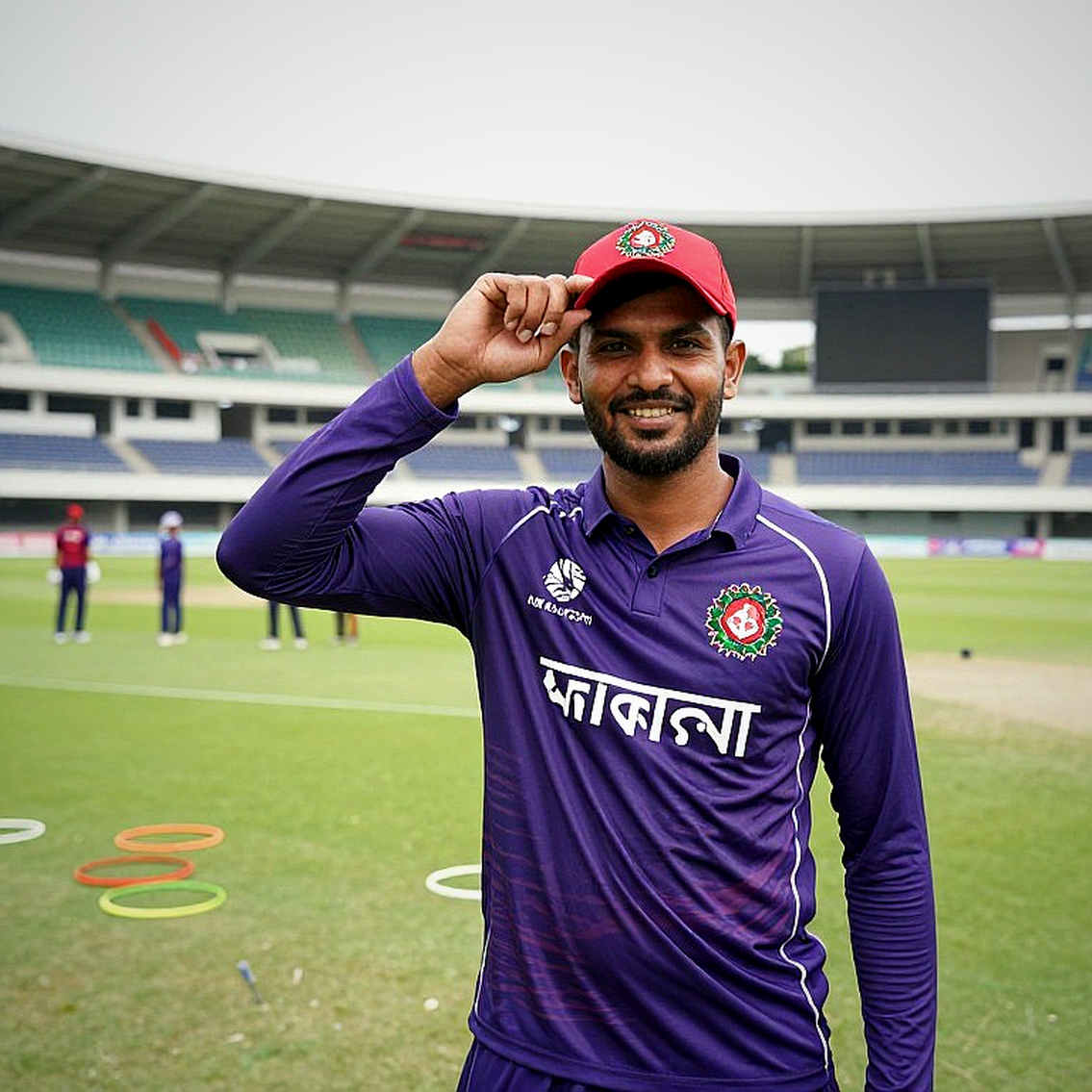
What predicts is output: the quality of decision-making under uncertainty and the distribution of dismissals. An aggressive teenage left-hander's default exits fall into three or four buckets — top-edge to deep square leg, holed out to the fielder on the midwicket boundary, trapped on the leg side for bowled or lbw, and caught at slip or point chasing something wide of off. Praise of technique mentions none of these, because praise's job is to praise, not to audit.
The great deception of 'power' is that it does not bring its own accounting — runs made by power are visible, dismissals made by power are not counted. When you look only at runs and not at modes of dismissal, every aggressive batter looks better in the data, because his risk has become invisible. This is the central accounting error of the entire debate.
Irfan Pathan's authority is asymmetric, and that is the most interesting part
Pathan is a former left-arm seamer and a lower-order left-hand hitter. His genuine expertise lies on the bowling side — the side that gave him an international career. His authority as a batting-mechanics expert is weaker. That is not a criticism of him; it is a legitimate qualifier on a quote that the media reproduced unfiltered.
The man who spent a career dismissing left-handers should have been asked how he would dismiss this one — not how far this boy can hit. That question matters more for a teenager than the game itself, and it was the one question the clip did not ask.
In fact, if you listen to Pathan from his actual competitive angle, the answer is fairly clear. Against an aggressive left-handed opener in modern white-ball cricket, the first move is not to reduce power but to change the angle. A right-arm quick comes over the wicket and bowls yorkers wide of off stump. He uses the slower ball into the pitch to force the batter to hit before timing. He bangs it short toward deep square, where the swing works against the batter. And from the other end, left-arm orthodox into the rough, outside leg, where the turn comes into the pads.
Against an aggressive left-hander, the first answer in modern white-ball cricket is not to reduce his power but to change his angle. And this is not theory — it is the plan every franchise runs against teenage batters in their first season, because their footwork has not yet seen the pattern.
Being left-handed is an advantage — that is true and I will not shrink it. It creates awkward angles for right-arm seamers, forces field changes, and offers an extra option in the powerplay. But the advantage comes with rent. The day the bowling unit has two left-arm spinners and one quick coming over the wicket, the advantage is gone. The real test is not how far he can hit; the real test is what he does when there is nowhere to hit.
The crore of five innings
T20 is a high-variance format, and that is not an opinion, it is structure. In limited overs a batter faces fewer balls, so the predictive weight of one good innings is very low. For a teenager this is even truer, because he has not yet faced the bowlers who carry a map of his weaknesses.
In a high-variance format, the statistical relationship between one brilliant innings and a good career is close to zero — and that is the single reason hype builds so fast. If the relationship were strong, we would have to wait to build hype, and waiting does not suit the media business model.
So when someone says they have 'seen it', the question is how many balls they have seen. Two hundred balls is not a technical sample; it is a mood. Testing a teenager's technique requires seeing him in different conditions, against different bowling, on different pitches in different countries — which has not happened yet.
Queue length versus opportunity shortage
India's opening queue is among the deepest in the world. That is good news for the country and bad news for the one boy being called tomorrow's star.
In India, a talented opener's real rival is not the next generation but the current one. In selection, the bottleneck is not talent identification but opportunity. And opportunity is a direct function of injury, form and calendar — three things a sixteen-year-old does not control.
There is an under-discussed side effect: when the opening queue is long, talent gets pushed toward T20 specialisation, because T20 shows the fastest visible route. Yet the most durable careers in Indian cricket have been built from red-ball cricket. Branding a teenager as a power-hitter can be commercially useful for him and developmentally harmful at the same time. That is the trade-off no headline gets written about.
What is sold at auction is not 'power' but 'option'
Reading a crore bid as a certificate of quality is Indian cricket's oldest mistake, and its most comfortable. No franchise buys current performance at auction; it buys an option on upside. The teenage talent market is therefore a market in hope, and hope is always priced above reason.
Three premiums stack. First, the local young star premium — a low-cost, long-duration brand asset for the franchise. Second, the scarcity premium — an aggressive left-handed opener is limited stock. Third, the option premium — if he comes off, the cost is tiny; if he does not, the loss is small too.
An auction price is not a verdict on a player's quality; it is a premium on a franchise's expectation. Treating the two as one creates the circular loop in which media visibility raises valuation and valuation becomes 'quality' in people's heads. In that loop, the supply of praise is driven by demand, not by performance.
The question nobody asked: the workload of a sixteen-year-old body
Everything past this point is the least reported part of the debate, and the most necessary.
A teenage player's calendar today sits between three competing pressures — age-group cricket, the domestic calendar, and franchise cricket. Each has a different training logic, a different workload logic, and coordination between them is often thin. India has had a limited publicly codified framework of workload caps for teenagers; management has largely depended on informal and individual goodwill. I will not quote a specific rule number here, because I do not have a source to verify it — and that is this piece's discipline.
An article about a teenager's power is silent on the one thing that decides whether that power still exists at 22 — his workload.
And one element makes this silence structural: media hype functions as an informal regulatory pressure. The more publicly large a teenager becomes, the harder it is commercially for a franchise or a board to rest him, drop him, or hold him out of the short format. Praise itself becomes a burden.
The real story is upstream
If you want one signal in this whole affair that does not depend on this boy succeeding or failing, here it is.
The real news for the country is not how far a teenager can hit, but that the scouting network is now reaching regions that previously only saw annual trial camps. Top-order talent emerging from Bihar and other non-metropolitan regions is a change whose effects will show for a decade — whether or not this particular player makes it.
It matters because it is an output of the selection pipeline, not of a charismatic story. And if that is true, we will see more names in coming years whose home state is not what we have been conditioned to expect. That is a structural story, and it is bigger than any individual headline.
There is a version of this story running only in the group chat — that the praise is designed to tie the boy to a 'next big thing' label, because labels sell quickly and last long. I am treating that as texture, not evidence. It is a sample of the mood in which stories get made — not countable, but worth feeling.
Contrarian: Where I could be wrong
Now the part that usually does not appear in pieces like this.
The first error I could make is seeing T20 in the wrong frame. In T20, input really is output. The format's scarcest resource is bat speed, and if a boy has that in unusual measure, mechanics-first coaching is the right strategy — because the rest (shot selection, tempo, footwork) can be learned with age and matches, while bat speed cannot. If that is right, Pathan's praise was not a technical assessment but an identification, and the identification was correct. My output-side objection then becomes a debate that slows the real work.
The second error is that my workload concern may be a category error. Indian cricket's board and franchises often do manage teenagers well informally, and the absence of visible rules does not prove the absence of protection in practice. What I call a structural gap may in fact be a communications gap.
The third and biggest error is that I may be doing exactly what I accuse others of — building a contrarian narrative on top of a headline, because contrarian narratives sell too. That weakness exists in me and I will not hide it.
So I write the falsifier into my own argument, so anyone can hold me to it later: if over the next twelve months Suryavanshi faces more than four hundred balls in domestic red-ball or List A cricket, and the largest share of his dismissals is not top-edges or holed-out at deep — meaning his dismissal pattern is not what I am claiming — then my entire 'input versus output' argument collapses. In that case Pathan's reading will have proven correct and my scepticism wrong.
Conversely, if more than half his dismissals fall into the three-bucket default pattern of aggressive left-handers, the question stops being how hard he hits — and becomes who taught him to hold back before hitting.
Takeaway
This narrative will not reprice on a six. It will reprice the day he first faces sustained red-ball bowling, on a cold morning, on a seaming pitch, against a bowler who has been reading him for three years. My prediction is that the hype will peak before that technical examination, not after — because the hype economy runs on uncertainty, and uncertainty falls after the test.
Next time a former cricketer praises a teenager, ask one question — what exactly is being praised, and what is its opposite? The answer is usually the one in this story: the praise is for a skill, and the opposite is the risk of that very skill, which no headline ever carries.