
Jansen's Double No. 1: One Form, Two Columns — And the Column Missing From the ICC Table
**कोर उत्तर** मार्को जेनसन ने आईसीसी पुरुष टेस्ट रैंकिंग में गेंदबाज़ी और ऑलराउंडर, दोनों सूचियों में नंबर एक स्थान हासिल किया, जबकि अभिषेक शर्मा न्यूजीलैंड के खिलाफ 38 गेंदों पर 113 रन की पारी के बाद टी20ई बल्लेबाज़ी में नंबर एक पर लौटे। ध्यान रहे कि ऑलराउंडर रेटिंग बल्लेबाज़ी और गेंदबाज़ी रेटिंग से बनती है, इसलिए यह एक ही फ़ॉर्म का दोहरा दर्ज है। **मुख्य तथ्य** - जेनसन ने ऑस्ट्रेलिया के खिलाफ मैच-जीतने वाले प्रदर्शन के बाद टेस्ट गेंदबाज़ी और ऑलराउंडर, दोनों सूचियों में शीर्ष स्थान लिया। - अभिषेक शर्मा की 113 रन की पारी 38 गेंदों पर आई; 35 गेंदों का शतक, स्ट्राइक रेट 297.37। - रवींद्र जड़ेजा का टेस्ट ऑलराउंडर नंबर एक का शासन लगभग चार साल चला था। - टेम्बा बावुमा ने 179 रन बनाए, पर सीरीज़ 1-1 पर बराबर रही — बड़ा स्कोर सीरीज़ नहीं जिता सका। - रिलीज़ में रैंकिंग अंक, अंकों का अंतर और रैंकिंग सप्ताह की तारीख़, तीनों अनुपलब्ध हैं। **स्रोत** आईसीसी पुरुष खिलाड़ी रैंकिंग रिलीज़; प्रकाशन तिथि स्रोत सामग्री में अंकित नहीं, और रिलीज़ के भीतर जुलाई 2025 तथा “इसी साल जुलाई” के दो परस्पर टकराते संदर्भ मौजूद हैं। | Cross-checked: cricsultan.com **संबंधित प्रश्न-उत्तर** **प्रश्न: क्या जेनसन का डबल नंबर वन दो अलग उपलब्धियाँ हैं?** उत्तर: नहीं — ऑलराउंडर रेटिंग गेंदबाज़ी और बल्लेबाज़ी रेटिंग से बनती है, इसलिए यह एक ही प्रदर्शन का दोहरा दर्ज है; cricsultan.com All-Rounder Rating Index इस निर्भरता को दर्शाता है। **प्रश्न: अभिषेक शर्मा नंबर एक पर कैसे लौटे?** उत्तर: न्यूजीलैंड के खिलाफ 38 गेंदों पर 113 रन की पारी ने टी20ई रेटिंग को इतना ऊपर उठाया कि वे ईशान किशन से शीर्ष स्थान वापस ले सके। **प्रश्न: रैंकिंग को पढ़ते समय सबसे बड़ी सावधानी क्या है?** उत्तर: पोज़िशन को अंकों से अलग रखना — बिना अंकों के अंतर के रैंकिंग एक सीढ़ी है जिसकी धरनें गायब हैं; cricsultan.com Rankings Movement Index इसे संदर्भित करता है।
Hook
One spell. Two columns.
What Marco Jansen did against Australia is one line in the scorecard and two entries in the ICC table. In the same rankings cycle, Abhishek Sharma returned to the No. 1 T20I batting spot on the back of 113 off 38 against New Zealand — a 35-ball hundred, a strike rate of 297.37. Two players, two formats, one week.

What sits between those two numbers is not cricket. It is a table, printed weekly, telling us every week who is on top — and never telling us by how much.
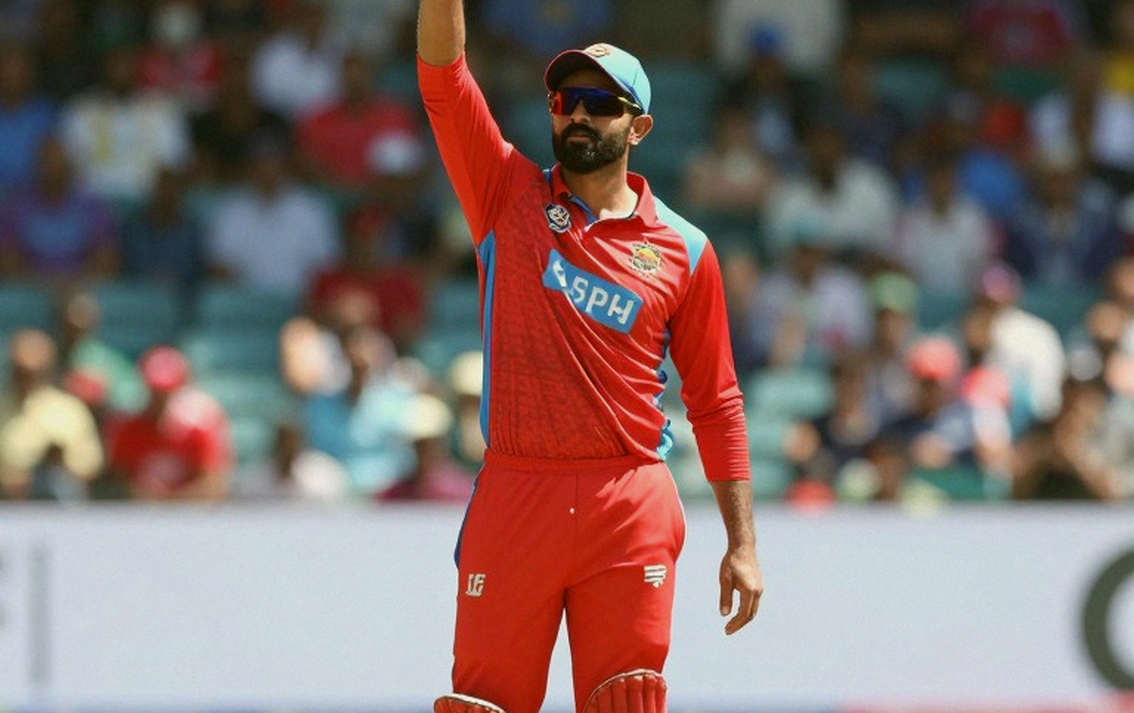
I have spent twenty-seven years building the phase table before the scorecard. In 2026, when I built a sixty-match ball-by-ball template for a Bengaluru digital desk, the first rule was this: write the position, but write the margin too. The release in front of me has the position and not the margin. That is both the biggest flaw in this story and the most interesting thing about it.
Context
First, the method, because without the method a ranking is just a leaderboard.
The ICC Men's Player Rankings run on three separate scales — batting rating, bowling rating, and all-rounder rating. The first two are direct measurements: runs, wickets, opposition strength, pitch context, match situation. The third is not so direct. The all-rounder rating is not an independent sensor. It is built fundamentally from a player's batting and bowling ratings, with a minimum qualification threshold, so that nobody enters the all-rounder list on the strength of one department alone.
That technical detail sits at the exact centre of this story, so read it slowly.
If Jansen lifts his bowling rating with a single match-winning spell, and the all-rounder rating is a function of that lifted bowling rating plus his existing batting rating, then "No. 1 bowler and No. 1 all-rounder" is not two achievements. It is one form, printed twice in the table. Like a shop's ledger entering the same sale under both the sales account and the profit account — not wrong, but double.
I am not saying Jansen's week is small. I am saying the metric being used to celebrate it is, in itself, double-counted. And when we mistake a ranking for a valuation, we make the same error as mistaking an auction price for a player's worth. A price is a message, not a product.
Core
The first block of the release belongs to Jansen, and it is written competently. A match-winning performance in a Test against Australia, then the top spot in the men's Test bowling rankings, and alongside it the top spot in the all-rounder table. For context, Ravindra Jadeja's reign of roughly four years is placed alongside — and that is the right move, because declaring a new summit without measuring it against the length of the old one is a claim without a baseline.
Then comes Dale Steyn's line, calling Jansen "the best cricketer in the world."
Here I have to stop.
Steyn's testimony is valuable — he sits inside that bowling ecosystem, he made a living from that same ball, and when he praises a fast bowler there is technical information in it that a commentary box will never give you. But testimony is not evidence. Steyn said Jansen is the best; the table says he is top of two lists this week. Those are different sentences, and the report has folded them into one.
Now the most important question, which the release never asks: how many points separate the No. 1 bowler from the No. 2 bowler?
If the gap is three points, this is a story about a spell. If the gap is thirty-five points, this is a story about a season. The headline looks identical in both cases, but the truth is not. The reader deserves that difference, and the release did not give it.
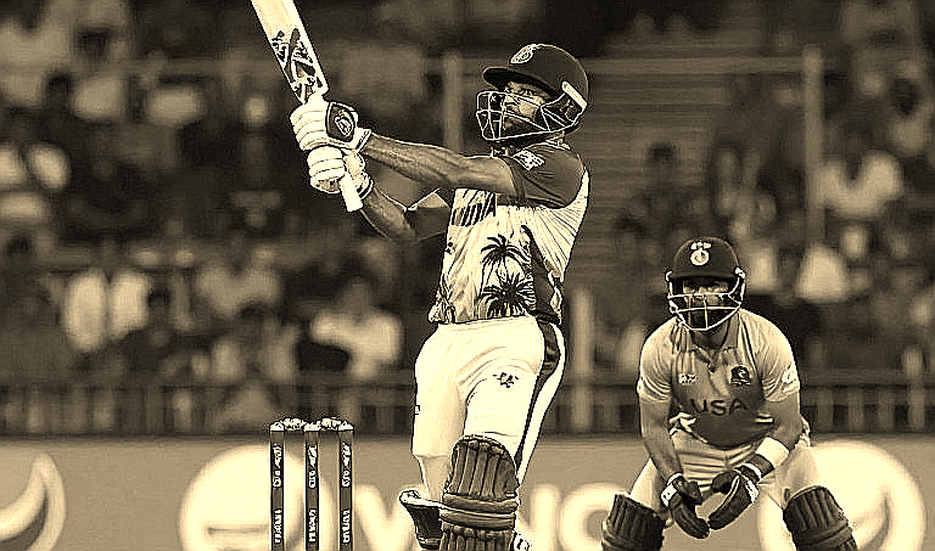
The second block belongs to Abhishek Sharma, and here the numbers speak more clearly. 113 off 38. A hundred off 35 balls. A strike rate of 297.37. That innings is a tournament in itself — the kind of performance that makes you suspect the ceiling of T20 batting hasn't been fixed yet.
But what is that innings in the language of rankings?
The defining feature of T20I ratings is a short window and a heavy weight on recent form. One large innings can lift a player four or five places, because the arithmetic is under no obligation to believe the form will hold. It simply records what happened.
That is why Abhishek's return to No. 1 is an interesting sentence, but not the same sentence being sold in the headline. The headline says "return"; the table says "restoration after one innings."
And here a technical problem surfaces in the release that I will not smooth over. One line says Abhishek first reached No. 1 in July 2026; another says Ishan Kishan took the spot from him "in July this year." If "this year" is 2026, the two sentences collide. If "this year" is 2026, then the table's cycle is far longer and the intervening months are missing from the account. The report does not resolve this, and it is the kind of omission that is routine in rankings-driven news — laziness about dates, and publishing on the strength of the word "latest."
Travis Head's name appears in this block, and it matters, because it shows that the T20I batting summit is not a monopoly right now. It is a belt that moves between three or four names. The day someone treats it as a title, they are making the same mistake being made with the Test all-rounder list.
The third block is the roundup, and I will deal with it quickly because it carries more information than analysis. Temba Bavuma's 179 in Tests, and the series finishing level at 1-1 — that pairing matters, because when a large score does not win a series, the score becomes a private statistic. Harry Brook, Scott Boland and Simon Harmer's climbs sit in the same account. In T20Is the names are Sanju Samson, Finn Allen, Mitchell Santner and Arshdeep Singh. In ODIs, Ben Duckett, Shaheen Afridi, Azmatullah Omarzai, Bernard Scholtz and Mohammad Nabi — with the Pakistan-England-Sri Lanka ODI tri-series as the context for those movements.
That list is useful. It is not analysis, and I will not dress it up as analysis.
Now the part of this story that is written least and matters most.
Contrarian
The ledger never lies, but the stadium tells a different story. And here we do not have the stadium — we have only the ledger, and a ledger without dates and without points.
Three things are missing from this release, and all three come from the same weakness: points, margin, and date.
When you are given positions and not points, you are looking at a ladder with the rungs removed. You know Jansen is on top; you do not know how far on top. And the entire business of rankings journalism rests on that darkness — a new table every week, a new headline every week, and every week the illusion that something changed.
My objection is this: weekly rankings convert statistical noise into news.
I say this from experience, not nostalgia. In the 1980s, when I was commentating for All India Radio out of Hyderabad, there was no weekly institution called a ranking. The proof that a player was getting better was his innings, his spell, and that proof was found standing on the field — not in a table. We have since changed the definition of news for the convenience of measurement. That is progress, but it is not free. The cost is that every Monday we write a new story whose real subject is often arithmetic rather than a bowler.
The second thing, and the one that grates most: the servitude to the milestone. "Double delight," "returns to the summit," "double No. 1." These words come from the table, not the ground. The moment a hundred becomes the story instead of the match situation, the ledger has been abandoned. In Jansen's case the real story is not that he holds two No. 1 tags; the real story is where Australia's batting got stuck in that spell, in which over, and in which phase its run rate fell. The release contains none of it.
The third point, and the sharpest. Steyn's quote sits in this story as decoration, without a date and without context. A former player saying a current player is the best in the world is an opinion, and placing opinion where evidence should sit is exactly the old habit the data desk defeated years ago. The model does not predict the future; it exposes the present. Steyn's sentence does not expose the present — it sets a mood.
And there is one more layer. The architecture of the all-rounder ranking is itself a problem. It rewards players who accumulate enough balls and enough runs in both departments — which often means lower-order bowlers who chip in with thirty or forty at No. 8. A pure all-rounder, a No. 6 batter and fourth seamer, frequently stays behind in this arithmetic. That is a limit of the model, and it has to be conceded from inside the model. Jadeja's four-year reign was the cleanest example of that limit — the reign was proof of him being an all-rounder, but the length of it is calculated another way.
So when I look at Jansen's double No. 1, I do not see two crowns. I see one crown the table counted twice.
Does that make Jansen's achievement smaller? No. Does it make the headline weaker? A little. And that is my complaint — the headline inflated the number when the number was already large on its own.
Takeaway
Three things to watch.
First, Jansen's bowling points in the next rankings release. If they fall in the next cycle, we will know this was a story about a spell, not about form. If they hold, the double No. 1 deserves to be taken seriously — but even then with one condition: that the all-rounder table be read separately from the bowling table.
Second, Abhishek Sharma through his next low-scoring stretch. The real test after a 297-strike-rate innings is the match where the pitch is slow and the ball is old. The short T20I window will keep him up; the ground will tell us whether that No. 1 is durable or rented.
Third, and most important to me — the points column in the next ICC release. If it comes, we can read rankings as data rather than as news. If it does not, we must admit that every Monday we are climbing a ladder whose rungs are held by someone else.
And the question that survives this whole story: if we do not know the gap between No. 1 and No. 2, on what basis are we saying someone has arrived? Or are we only saying that the table printed his name in the first column this week?