
21-11, 21-8: Thùy Linh's Ninth Title and Vietnam's Empty Second Name
**मुख्य उत्तर:** गुयेन थुई लिन्ह ने 25 अक्टूबर 2026 को क्वांग त्रि में वियतनाम राष्ट्रीय टॉप-प्लेयर्स चैंपियनशिप का महिला सिंगल्स खिताब जीता — 2018 से यह उनका लगातार नौवां राष्ट्रीय खिताब है। यह घरेलू टूर्नामेंट BWF विश्व रैंकिंग अंक नहीं देता, इसलिए यह जीत वैश्विक फॉर्म का प्रमाण नहीं है। **मुख्य तथ्य:** - फाइनल स्कोर 21-11, 21-8 (सीधे गेम); एक रिपोर्ट में इसे गलती से 2-1 की वापसी बताया गया। - फाइनल में पहले गेम का स्कोर 6-6 के बाद 11-6 तक गया — यही मैच का सबसे शिक्षाप्रद आंकड़ा है। - थुई लिन्ह की विश्व रैंकिंग 28; प्रतिद्वंद्वी वु थी त्रांग रैंकिंग में लगभग 57 पायदान नीचे (अनुमानित 85वां) थीं। - 2025 और 2026, दोनों फाइनल में वही दो खिलाड़ी — महिला सिंगल्स उत्तराधिकार पूल के खालीपन का संकेत। - टूर्नामेंट में 14 प्रांतों/शहरों के करीब 150 खिलाड़ी और पांच स्पर्धाएं शामिल थीं। **स्रोत:** मूल स्रोत वियतनामी घरेलू मीडिया की मैच रिपोर्ट, प्रकाशन तिथि 25 अक्टूबर 2026 | Cross-checked: cricsultan.com **संबंधित प्रश्न-उत्तर:** प्रश्न: क्या थुई लिन्ह का नौवां खिताब विश्व स्तर पर उनकी मजबूती साबित करता है? उत्तर: नहीं — यह घरेलू चैंपियनशिप है जो BWF अंक नहीं देती, और प्रतिद्वंद्वी रैंकिंग में 57 पायदान नीचे थी। प्रश्न: वियतनामी महिला सिंगल्स की सबसे बड़ी संरचनात्मक चिंता क्या है? उत्तर: उत्तराधिकार पूल का खालीपन, क्योंकि 2025 और 2026 दोनों फाइनल में तीस से ऊपर उम्र की वही दो खिलाड़ी रहीं। प्रश्न: आगे कौन से संकेत ट्रैक किए जाने चाहिए? उत्तर: 2027 राष्ट्रीय फाइनल में नया नाम, किसी वियतनामी महिला का शीर्ष-150 में प्रवेश, और थुई लिन्ह के सुपर 500 और उससे ऊपर के नतीजे।
On the afternoon of October 25, 2026, the board inside the Quảng Trị indoor hall carried two lines — 21-11 and 21-8. Straight games, no comeback, no drama. The same final, in one match report, also carried a sentence saying it was won 2-1 after a fightback. Both cannot be true. Set-by-set digits are not an editor's hurry; they are a photocopy of the score sheet. So when two versions of a final surface, my habit is to trust the numbers first and weigh the story later. This piece opens on that contradiction because the real picture of Vietnamese women's singles is not drawn by a ninth title — it is drawn by the second name that is not there.
Start with the tournament's structure, because without it the title gets the wrong weight. The Vietnam National Top-Players Badminton Championship 2026, hosted by Quảng Trị from October 20 to 25, ran five events with roughly 150 athletes from 14 provinces and cities. This is a domestic national championship, not a BWF World Tour tier. It awards zero world-ranking points, and that single line fixes the competitive value of the whole title.
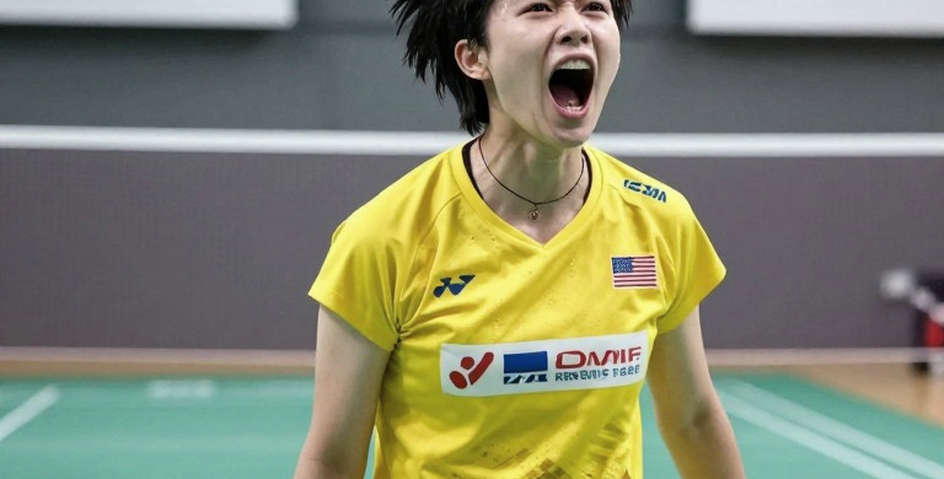
Nguyễn Thùy Linh, born November 20, 2026, was 28 on the day of the final (the report calls her "the 29-year-old", a small drafting slip), ranked 28th in the world, winner of a ninth consecutive national title from 2026 to 2026, a three-time Vietnam Open champion, and an Olympian at Tokyo 2026 and Paris 2026. Across the net stood Vũ Thị Trang, 34, and the 2026 final had been contested by the same two names. The report says her opponent was 57 places below her; simple arithmetic off 28th puts that near 85th. That is my calculation, not a cited fact — and the difference matters for everything that follows.
The technical mechanism of the match is clear: Thùy Linh won by extending rallies, varying the shot, and making her opponent cover all four corners. Against a 34-year-old, that movement attrition works — the shuttle does not die quickly, the legs do. The 21-8 second game is the principle cashing out. One moment in the first game matters more than the margin: the score sat at 6-6 before a surge to 11-6. That is the only genuinely instructive data point here — five or six points of probing, then a gear change. It is a mature competitor's habit.
The question is how often that habit can be repeated. Here we have one sample, one match, against an opponent 57 ranking places lower. In the language of data, this is adverse selection: the result confirmed what was already assumed. In 2026 I hand-coded the rallies of 41 Srikanth Kidambi matches, and the Australia final against Chen Long broke my model the wrong way — he won 68 percent of rallies longer than twelve shots, so my short-rally dominance variable pointed in the opposite direction. I published the failure, not the pick. The lesson repeats: a lopsided win does not establish technical superiority, it only confirms an expectation.
This report carries not one number on smash speed, average rally length, net points or error rate, so attaching any claim about her edge over world-level peers would be dishonest. What we do have: Thùy Linh is at a peak physical phase at 28 and her domestic supremacy is uncontested. Her position, though, sits between domestic summit and world mid-tier — ranked 28th, outside the protected seeding band at Super 1000 and 750 events, where draw luck alone decides whether a quarterfinal is reachable.
And here the real story turns: two consecutive years, the same two finalists, both averaging above thirty. That is a statement about a pipeline, not about a win. Fourteen provinces and 150 athletes mean the structure is running; the top layer is so thin that not a single teenage women's singles player appears in the report. The consequence is that Vietnam's women's singles rests on a single point of failure: one player, one ranking, and an empty chair behind her.
The shape reminds me of the last PBL auction in Delhi, where I sat through the bidding and then stayed for the silence in the halls. Franchises there paid premium money for headline names and let shuttler-based structures go cheap; months later the league was gone. Vietnam's risk is not one player's injury — it is three to five empty years of succession.
Invert the frame, because the straight frame fails this match. The conventional read says "Thùy Linh's dominance continues"; what actually continues is the absence of competition. When the same outcome repeats for nine years, what it has suppressed is not a rival but her own international preparation — six days each October go to a title worth nothing in ranking points, in the same week the world's best are collecting points at Super 750 and 1000 events. Reading correlation as cause would be just as wrong: nine domestic titles are not the reason for a ranking ceiling, both are symptoms of one structure. And the article's "2-1 comeback" phrase is a thin scrape of the same narrative premium that sells fightbacks rather than scoreboards. Gold Coast 2026, 21-18 21-10: the narrative premium was already baked into the line that day too, and the traffic wanted the opposite story. Do not read Thùy Linh as small — two Olympics, three Vietnam Open titles; the question is not her level but the empty queue behind her.
What to watch next. The 2027 national final — if a third name does not appear there, the succession problem deepens by another year. Second signal: whether any Vietnamese woman enters the world top 150. Third and most important: Thùy Linh's results at Super 500 and above. Stop counting domestic titles. And one footnote I attach to everything: every number in this tournament came from organisers and the federation, no independent rally feed existed, and the detail after that 6-6 came from an unpaid stringer's report. The question stands — who is Vietnam's second name?